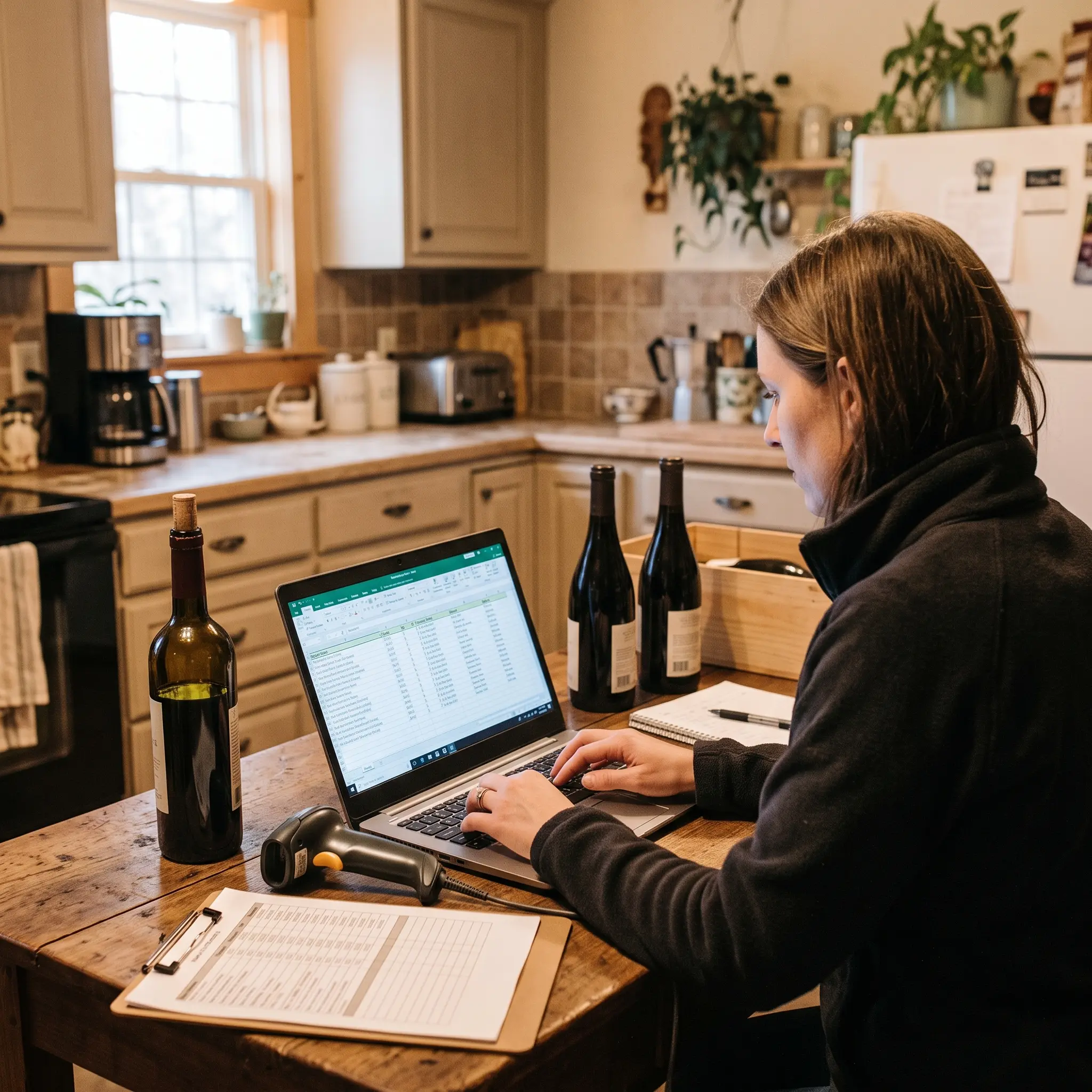
A friend is sitting across from me at his kitchen table, and I've just handed him my phone. He's the first person outside our house to see Corkboard. He picks a bottle off the counter, takes a photo of the label, and watches the record appear. He adds where he bought it and what he paid without asking me how. Then he sets my phone down, opens his laptop, and turns it toward me. It's a spreadsheet, with a row for every bottle he owns and columns for the producer, the vintage, the price, and where each one is stored. He's been building it for years.
"This is a lot easier than keeping that up," he says, nodding at my phone. "But all my work is in here, and I don't want to start over. Could I just add my spreadsheet?"
A wine spreadsheet is a reasonable way to track wine
I told him we hadn't thought of it. My wife and I came to Corkboard with the idea of starting from scratch, but he already had a system, and it worked.
Let's face it. A wine spreadsheet is flexible, familiar, and entirely under your control. You choose the columns, you sort it however you like, and nobody can change how it works or take it away from you. Plenty of people with a real collection keep a wine cellar spreadsheet for those reasons. Where it gets hard is the upkeep. It's typically a "when I get around to updating it". The spreadsheet falls behind the rack, and catching it up turns into a chore.
We decided to offer both options
What I didn't want was to react by making Corkboard more complicated (even if this is my personal first reaction). On a phone, the app is still a photo and a few details, and that hasn't changed. What changed is what you see when you open Corkboard on a desktop. There, your wines appear in a full spreadsheet interface, with the rows and columns he was used to, and a simple upload workflow brings in the spreadsheet you already keep. You can import your wine collection, and those bottles sit next to the ones you add with a photo. The years of typing carry over, and from that point on a new bottle takes a picture instead of a row.
I'd also suggest holding on to the original spreadsheet file after you upload it. It's yours, it's a good backup, and moving to a simpler tool doesn't mean the old one has to be deleted.
What a wine spreadsheet taught me about building a simpler wine app
Corkboard exists to make wine tracking simpler. This conversation didn't change the mission. It showed me that simple isn't the same for everyone. For us, simple is a photo and four details on a phone. For him, simple is a grid he can update on a desktop while still having everything on his phone at the restaurant.
Corkboard is free, and you can find it at corkio.co.